

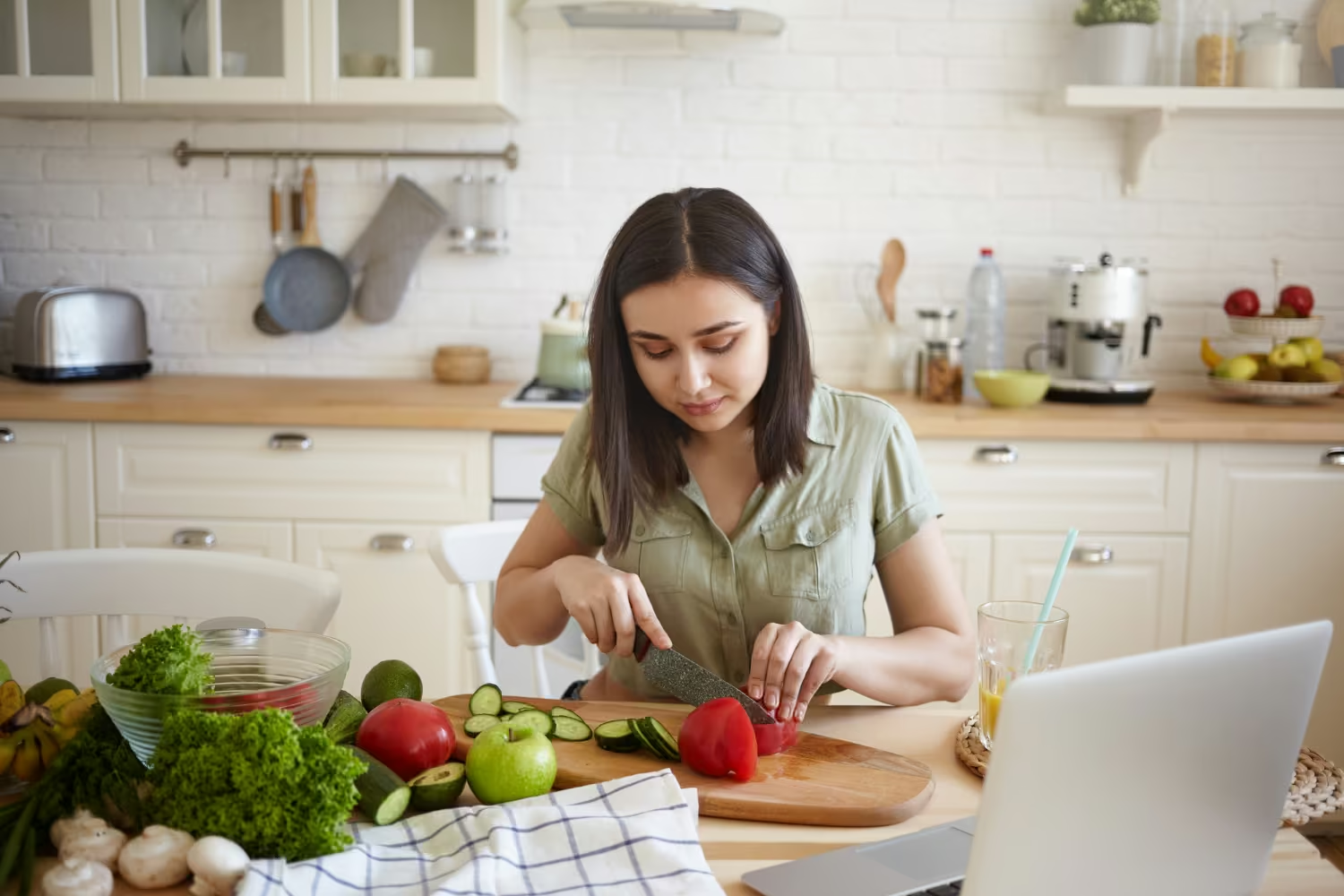
There’s a quiet revolution happening in kitchens across the country and it doesn’t involve celebrity chefs, Michelin stars, or gleaming restaurant fit-outs. It starts with a neighbour who makes the best jerk chicken you’ve ever tasted. A colleague who sells meal-prep boxes every Sunday. A mum two streets away who bakes birthday cakes that people travel across town for. This is the rise of the community-based food business, and in 2026, it’s not a trend. It’s a movement.
What Is a Community-Based Food Business?
A community-based food business is exactly what it sounds like: a food venture rooted in a local neighbourhood, built on real relationships, and powered by home kitchens rather than commercial premises. Unlike a restaurant or food chain, these businesses don’t rely on footfall or franchises. They grow through word of mouth, group chats, and the simple fact that people trust the person cooking their food because they know them.
In 2026, this model is not just viable. For thousands of home cooks, it’s become their primary or secondary income, and the appetite for it shows no signs of slowing down.
Why Community Food Is Having Its Moment
Three things came together to make this possible.
For a lot of modern diners, they want to know the story behind their plate, who cooked it, where it came from, and what’s in it. After years of ultra-processed convenience food dominating the market, consumers are actively seeking out meals that are fresh, home-cooked, and made with care. They’re not just buying food anymore, they’re buying a story, a standard, and a relationship.
Side income culture is mainstream. As covered in How to Turn Home Cooking Into a Side Income (2026 Guide), starting a home food business has never been more accessible. Low startup costs, flexible scheduling, and digital tools mean that almost anyone with a skill and a standard can earn real money from their kitchen.
Local beats global. After years of globalisation, communities are rediscovering what local means, and spending accordingly. Buying food from a neighbour isn’t just convenient. For many, it feels like the right thing to do.
The Business Model That’s Working Right Now
Community food businesses succeed when they combine three things: a clear niche, a loyal local audience, and a reliable system.
1. A Clear Niche: The most successful home food businesses don’t try to be everything to everyone. As explored in of our previous articles ‘7 Signs You’re Ready to Start Selling Homemade Food’, choosing one or two specialities is what allows you to build a recognisable brand. Whether it’s tiffin boxes for office workers, weekly healthy meal prep, festive sweets, or custom cakes, specificity builds trust.
Ask yourself: What does my community need that nobody is providing well?
That question alone can unlock a profitable food business.
2. A Loyal Local Audience: Community food businesses thrive on repeat customers… people who come back every week, refer their friends, and feel personally invested in your success. This loyalty doesn’t come from advertising. It comes from consistency, quality, and genuine connection. Your first ten customers are your most important. Treat them like VIPs, because they’ll become your most powerful marketing team.
3. A Reliable System: This is where most aspiring home food businesses stall. Passion is easy. Systems are harder. Managing orders, tracking payments, handling pickups and deliveries, maintaining food hygiene standards. These operational demands can overwhelm even the most talented cooks.
This is exactly the gap platforms like WeCook are built to fill… giving community food businesses the tools to operate professionally without losing the personal touch that makes them special.
From Passion to Real Income
The journey from cooking for compliments to cooking for income is shorter than most people think, but it does require intention. As our previous article explains, From Passion to Profit: Monetising Your Kitchen Skills, you don’t need a culinary degree or a commercial kitchen to get started. You need clarity on your niche, a pricing strategy that covers your costs and your time, and the confidence to charge what your food is worth.
The pricing formula is simple:
Ingredients + Labour + Packaging + Overhead + Profit Margin = Your Price
Many new home food sellers undersell themselves. The community food economy works best when cooks are fairly compensated. When you earn properly, you invest back into quality ingredients, better packaging, and a better customer experience. Everyone wins.
The Best Time to Start? Now!
One of the most common reasons people delay starting a home food business is waiting for the “right time.” The right certification. The right equipment. The right moment. As The Best Time to Start a Home-Based Food Business makes clear, that moment rarely arrives on its own. The cooks who are building sustainable community food businesses right now are the ones who started imperfectly and improved along the way.
The good news: the barriers to entry in community food are low. You don’t need a shopfront. You don’t need a marketing budget. You need a quality product, a phone, and the willingness to begin.
The Community Food Economy: Bigger Than You Think
It’s easy to look at a neighbour selling meal boxes and see a small operation. But zoom out, and the picture is much bigger.
Community-based food businesses collectively represent a growing share of the local food economy. They generate income for people who would otherwise have no access to it. They provide fresher, more culturally relevant food options to underserved areas. They create micro-economies where money circulates locally rather than leaving the community.
In cities and towns with large South Asian, African, Caribbean, and Middle Eastern communities, home food businesses often serve cuisine that simply doesn’t exist commercially at a local level. That’s not a gap in the market, it’s an opportunity. And it’s one that we mentioned in our article, Your Kitchen Is a Business Waiting to Happen – which captures this idea perfectly: the skills and knowledge many home cooks take for granted are genuinely rare, genuinely valued, and genuinely marketable.
What Successful Community Food Businesses Have in Common
After speaking with hundreds of home cooks and food entrepreneurs, a few consistent patterns stand out among the ones who succeed:
They start with what they know. The best community food businesses are authentic, not aspirational. They sell what the cook genuinely makes best and not what they think will sell.
They build relationships before they scale. Growth in community food is organic. Rushing it by taking on more orders than you can handle is the fastest route to burnout and bad reviews.
They respect food safety. Trust is everything in community food. Proper hygiene, clear allergen labelling, and correct food storage are non-negotiable and customers notice.
They use the right tools. Managing a home food business manually through WhatsApp messages, cash in hand, and hand-written order lists works at first, but it breaks down quickly. Platforms, like WeCook, designed for home food sellers make the difference between a hobby and a real business.
They price themselves properly. The community food businesses that last are the ones that treat income seriously from day one.
Your Kitchen Is Already a Business
The rise of community-based food businesses isn’t a future trend to watch. It’s happening right now, in your street, your neighbourhood, your town.
The question isn’t whether the opportunity exists. The question is whether you’re ready to take it. If people already love your food, if you have a dish that your community keeps asking for, if you’ve ever thought “I could sell this,” you’re already closer than you think.
WeCook exists for exactly this moment. We help home cooks turn their passion and skill into a real, sustainable income with the tools, support, and platform to grow on their own terms.
Your kitchen is ready. The community is hungry. The only thing left is to begin.
Ready to start your community food business? Download the WeCook app and join a growing network of home cooks building real income from their kitchens.