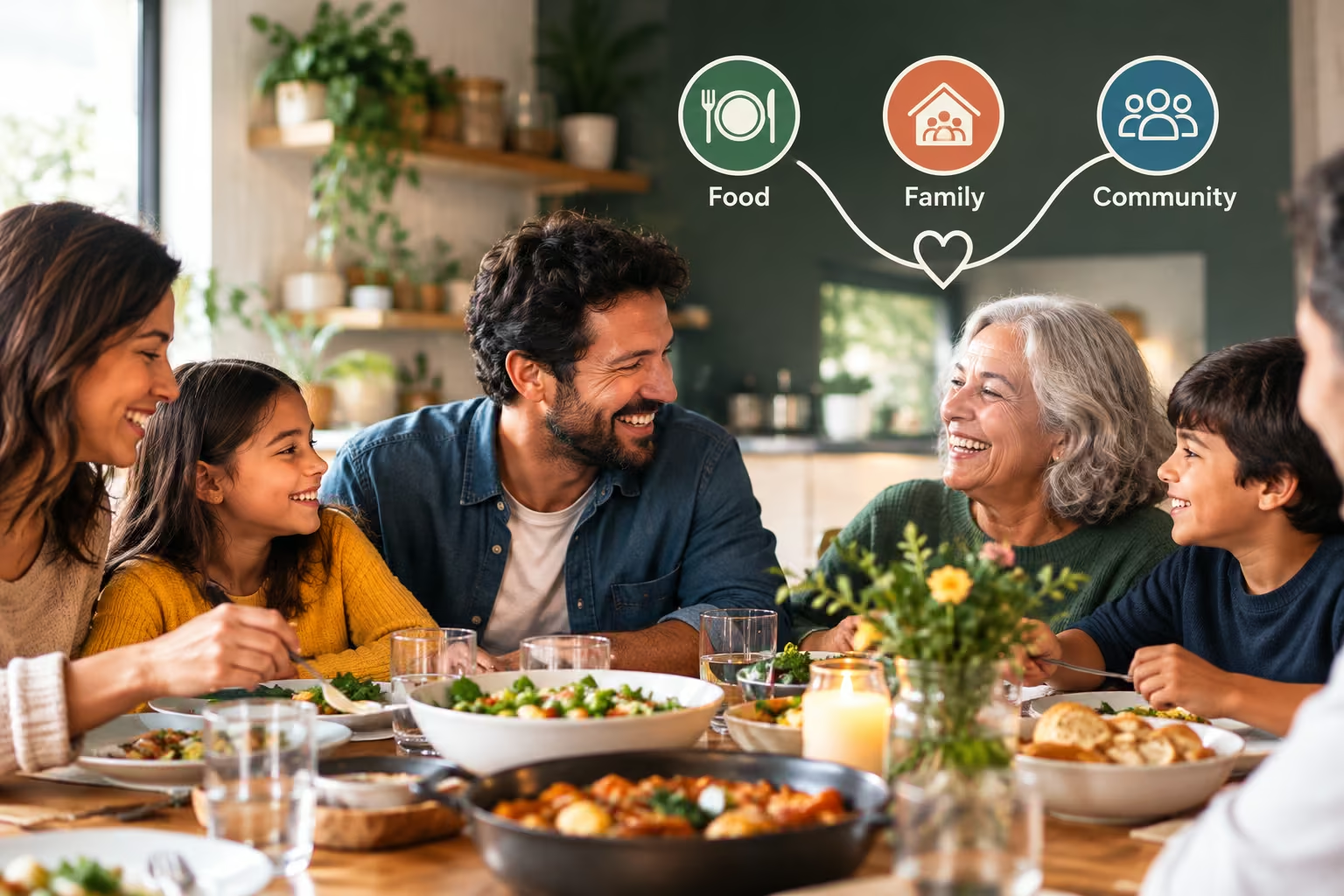
Think about a meal you still remember years later. Chances are you don’t remember it for the plating. You remember who was sitting beside you, the kitchen it came from, the smell in the room, and the person who always made that particular dish.
That is the emotional connection between food and family, and it extends well beyond the dinner table. Food holds memories, carries traditions and brings neighbours together. In a world that feels faster and more digital every year, that connection matters more than ever.
In this article, we look at why food is so tied to love, belonging and identity, and why homemade food from local cooks keeps that connection alive.
Food Is Often How We Say “I Care”
Not everyone expresses love in the same way. Some people say it, and others cook it. Phrases like “Have you eaten?”, “Take some home with you” and “I made your favourite” appear in households and cultures all over the world, because feeding someone is one of the most natural ways to care for them.
A parent packing a lunchbox, a friend dropping off a meal during a hard week, and a grandparent insisting you take another helping are all small gestures with the same message: you matter to me.
This emotional meaning is why homemade food feels different from something anonymously produced and packaged. Someone chose the ingredients, prepared the dish and tasted the sauce to decide it needed something else. There is a person behind the plate, and that relationship can easily disappear when convenience becomes the only thing that counts.
Why Family Meals Matter
For many families, the most important conversations don’t happen in formal settings. They happen at breakfast before everyone disappears into their day, over Sunday lunch, around a crowded table at a celebration, or during a quick evening meal when everyone finally has time to talk.
Research has found associations between regular family meals and social and emotional wellbeing. Studies have linked frequent shared meals with stronger family functioning, and newer research suggests the quality of interaction around the table matters alongside how often families eat together.
The meal itself can be simple. What matters is that sitting together gives people uninterrupted time in the same place, and a chance to ask:
- How was your day?
- Are you okay?
- What are you excited about?
Sometimes the most valuable ingredient at dinner is simply time to listen.
Recipes Carry Family History
Almost every family has a recipe that belongs to someone: Grandad’s Sunday roast, Mum’s curry, an auntie’s celebration cake, or a grandmother’s soup that nobody else can quite recreate.
When a recipe passes from one generation to the next, more than instructions are handed down. Stories, traditions and memories travel with it. A handwritten recipe with stained corners can hold decades of family history in a way few other objects can.
That is why traditional food feels so personal. For someone living far from where they grew up, finding an authentic homemade dish from their culture can bring an immediate emotional response. The flavour and smell are familiar, and for a moment home feels closer.
Food Helps Keep Culture Alive
Food is one of the most accessible ways to experience culture. You may not know someone’s language, history or traditions when you first meet them, but sitting at their table can offer a glimpse into where they come from. Recipes reflect geography, migration, religion, celebration and generations of creativity.
This is especially visible in diverse neighbourhoods, where people may be cooking African, Caribbean, South Asian, Middle Eastern, European, East Asian and Latin American dishes behind ordinary front doors every evening.
When homemade food is shared beyond the household, culture is shared too. A customer who orders a dish they have never tasted before discovers not just a new flavour but a new story. Food makes curiosity easy, because you only have to take the first bite.
From Family Table to Community Connection
What happens around a family table can happen across a whole neighbourhood. Food introduces people to each other.
A local baker starts selling cakes. Someone nearby discovers them, orders again and recommends them to a friend. Soon the baker is no longer “someone who sells cakes” but the person everyone calls for birthdays. That is how food and community connect: slowly, repeatedly, through familiar faces and small interactions. We explored this further in The Rise of Community-Based Food Businesses.
When you buy homemade food locally, you are choosing not only what to eat but whose work to support.
Why Local Food Feels More Personal
There is something different about knowing who made your meal. The person making your samosas might use their mother’s recipe. The baker behind your birthday cake may have started baking for their own children’s celebrations. The cook preparing your weekly meals might be building a small business after years of friends saying, “You should sell this.”
Suddenly the transaction becomes human. You recognise the cook, and they remember what you ordered last time.
This matches wider findings on wellbeing. The World Happiness Report work on sharing meals with others highlights the close link between eating with others, social connection and reported happiness. Food has always helped people form relationships, and technology doesn’t have to replace that. Used well, it can help people find those relationships again.
Homemade Food Has a Story Commercial Food Often Can’t Match
Large food companies are built around consistency and scale. Home cooks offer something different: personality. Their food may come from a family recipe, a cultural tradition, years of experimentation, or a dish friends simply wouldn’t stop asking for.
That story creates emotional value. You aren’t just buying lasagne, you may be buying the recipe a family has made every Sunday for twenty years. You aren’t just ordering cupcakes, you may be supporting someone who started baking at their kitchen table and is now turning that skill into an income.
Read more in Your Kitchen Is a Business Waiting to Happen and How Social Media Is Changing Homemade Food Brands. For local food, being small is often the strength.
Food Creates a Sense of Belonging
Community can feel like an abstract word, but food makes it tangible. It looks like neighbours gathering at one table, or someone bringing a dish to a new family on the street. It looks like discovering a cook five minutes away who makes the food you grew up eating, or a small food business recognising the same customer every Friday.
These ordinary exchanges build familiarity. Familiarity builds trust, and trust builds belonging.
Every Cook Shares More Than Food
When someone starts selling homemade food, it’s easy to think the product is just the meal. Often much more is being shared: a recipe, a culture, a memory, a skill, a family tradition, a piece of someone’s personality.
That’s why the most memorable food creators are rarely remembered for the menu alone. Customers remember how the food made them feel: comforted, excited, nostalgic, curious, at home. That feeling can turn a first-time order into a weekly habit.
Every Customer Helps Keep a Local Story Going
Connection works both ways. When customers choose a local home cook, they help someone continue doing what they love. An order might help a cook test a business idea, build confidence, earn extra income or introduce their cultural food to new people. You see dinner arriving, but behind it may be someone’s very first business.
The Future of Food Might Look a Little More Like the Past
Ordering is faster, delivery is easier and choice is enormous. But the most meaningful future for food isn’t one where the human element disappears. It’s one where technology helps us rediscover it: finding the cook nearby, tasting food that feels like home, and supporting the people in our own neighbourhoods.
The meals we remember most rarely begin with an algorithm. They begin with a person, a kitchen, a recipe, and someone saying, “Try this.”
Frequently Asked Questions
Why is food so emotionally connected to family?
Food is tied to memory, care and tradition. Shared recipes, family meals and the act of cooking for someone are everyday ways of showing love, so certain dishes become linked to the people and moments around them.
How does food bring a community together?
Food gives people a reason to meet, share and return. Local bakers, home cooks and shared meals create repeat interactions, which build familiarity, trust and a sense of belonging.
Why does homemade food feel more meaningful than restaurant or packaged food?
Homemade food comes with a person and a story behind it, such as a family recipe, a cultural tradition or a personal passion. That human connection is what many people find missing in mass-produced food.
How can I support local home cooks?
Order from cooks and bakers in your area, recommend them to friends and leave honest reviews. A marketplace like WeCook makes it easy to discover homemade food near you.
Food Is Better When It Connects Us
At WeCook, we believe food should do more than fill a plate. It should bring people closer. Our marketplace connects customers with passionate local cooks and bakers, helping people discover homemade food near them while supporting the people creating it.
Behind every homemade dish is a cook, a story, a tradition and a little piece of home.
Ready to discover homemade food near you, or share your own creations with your community? Download the WeCook app and join a growing community of local food lovers and creators.