

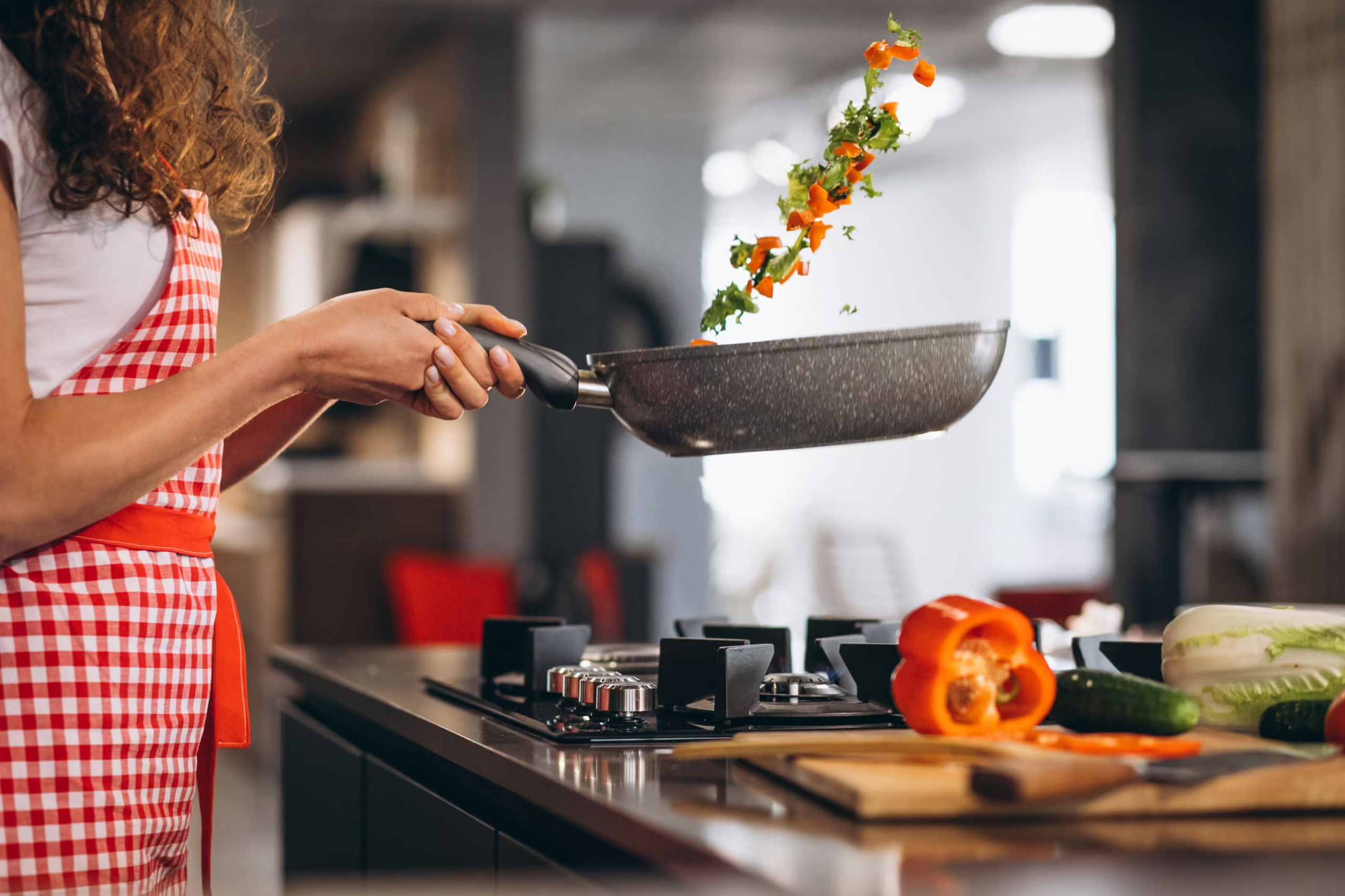
In 2026, the best dining experiences aren’t found in malls they’re delivered from ghost kitchens powered by passion. Don’t spend money on a physical storefront before you’ve tested your product-market fit. At WeCook, we empower the food creator economy to scale fast, stay sustainable, and own the digital storefront from day one.
If you love cooking and want to make some extra income, you just need a simple plan and the right business model.
Stop waiting for some big day. Start from your kitchen’s stove!
You don’t need a massive loan or a commercial lease to become a founder. Your kitchen is already your biggest asset; it’s a laboratory where you can turn a passion into a paycheck with virtually zero financial risk.
Why now is the perfect time:
- The Modern Palate: Diners are moving away from big chains and moving toward local, artisanal flavors.
- Proof of Concept: Scale at your own pace. Start with five orders a week and grow into fifty.
- Direct Connection: Build a brand that feels like family, not a factory.
- Small investment: You already have the stove and the pans. Spend your small startup capital on fresh ingredients and packaging instead of rent.
- Work when you want: You can fit this around your job or your family time. You’re the boss of your own schedule.
- High demand: A lot of people love homemade food. People feel better eating healthy home-cooked meals that are fresh, hygienic, and made with love.
- Grow at your own pace: Start with five orders this week. If it goes well, you can move to fifty when you’re ready.
Start Small, Test Growth, ScaleSmart
The biggest mistake is trying to do too much too early. Don’t launch a massive menu! At WeCook, we suggest focusing on market validation first.
Try starting with just 1 or 2 signature dishes. Offer a special dish. The best trick is to take pre-orders. If you only cook what people have pre-ordered, you never waste food and you never lose your hard-earned money.
5 Easy Food Business Ideas for Your First Week
- Daily tiffin service: Perfect for South Asian students and office workers who miss their mom’s cooking.
- Healthy kids’ snacks: Parents are always searching for better, nutritious lunch box options.
- Homemade staples: Things like pickles or your own authentic masalas last a long time and are very easy to deliver.
- Home bakery: Fresh cookies or custom birthday cakes always feel more special when they’re local and homemade.
- Regional specials: If you have a family recipe from your hometown that nobody else makes, that’s your competitive advantage to stand out.
Keeping it Legal and Profitable
To make a real profit margin, buy only what you need so your cash isn’t sitting on a shelf. For the legal side in the UK, you must register your food business with your local London council (such as Westminster, Camden, or Lambeth) at least 28 days before opening.
It is free to do, cannot be refused, and is a legal requirement even for home-based businesses. This registration ensures you are on the radar for Food Hygiene Rating inspections, which shows your customers that you follow high safety standards a vital step for building trust in the London market.
Key UK Requirements to Remember:
- Local Authority Registration: Visit the GOV.UK website to find your specific London borough’s registration portal.
- Food Hygiene Certificate: While not always strictly required by law for everyone, having a Level 2 Food Safety and Hygiene certificate is the industry standard and highly recommended.
- HACCP Plan: You’ll need a simple food safety management plan based on the principles of Hazard Analysis and Critical Control Point (HACCP).
Final Thoughts: Your Kitchen is Your Launchpad
Every famous food brand started with just one person and one great recipe. By starting small and low-risk, you give yourself room to learn without the stress of debt. With WeCook, you can start with what you have, test your ideas, and grow at your own pace!
Frequently Asked Questions (FAQs)
Q1. Is it hard to manage a food business alone?
Ans: Not if you start small! The key is to have a limited menu. At WeCook, we suggest picking 1–2 dishes you are great at. This keeps your shopping simple and ensures you don’t get overwhelmed in the kitchen.
Q2. How do I get my very first customer?
Ans: Start with WhatsApp marketing. Share a high-quality photo of your dish in your local community or building groups. Usually, your first customers are neighbors who are looking for a break from cooking and want fresh, hygienic food.
Q3. Do I really need a license?
Ans: It is always a good idea to check your local food safety standards. In many places, a basic registration (like FSSAI) is easy to get online. It builds huge brand trust because it shows you care about your customers’ health.
Q4. Can I really make a profit from my kitchen?
Ans: Yes! Because you don’t have to pay for a shop or extra staff, your overhead costs are very low. This means most of the money you make stays in your pocket as profit.