

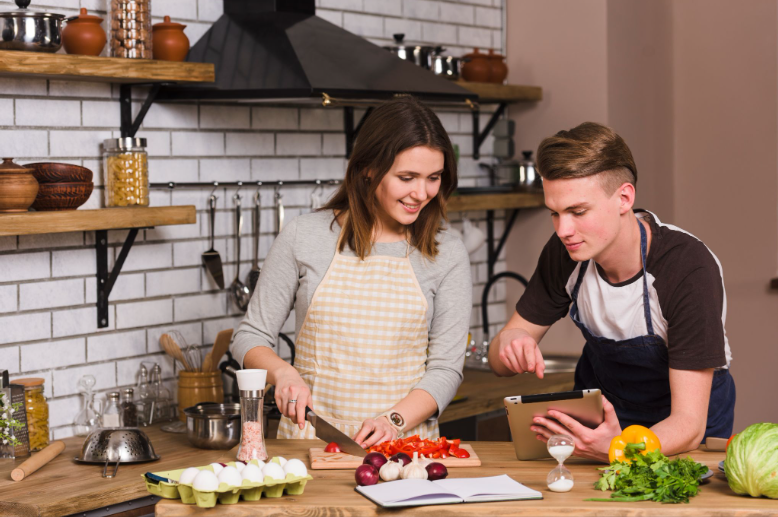
Welcome to WeCook! If your Sunday ritual involves a kitchen full of steam, the rhythmic sound of a chef’s knife, and a fleet of perfectly stacked containers, you’re already ahead of the curve. While others see a chore, you’ve mastered a system of efficiency.
Meal Prep Lovers: You’re Sitting on a Business Idea. The transition from a personal routine to a profitable venture is closer than you think, and the current market landscape is perfectly aligned for you to thrive.
Understanding the Surge in Real Customer Demand
In a city like London, “time-poverty” is a genuine hurdle for the modern professional. The gap between wanting to eat healthily and having the energy to cook after a long commute, has never been wider. This has resulted in real customer demand for nutrition-focused, homemade food.
Consumers are showing signs of moving away from ultra-processed ready meals found on supermarket shelves. They’re searching for the soul and quality of a home-cooked meal but with the convenience of a grab-and-go service. By launching a small food business from home, you aren’t just selling food, you’re selling time and health back to your clients.
Strategy for Meal Prep Lovers: Building Your Brand
Turning your passion into a business requires moving from ‘cooking by feel’ to ‘cooking by design’. To ensure your home kitchen becomes a success, consider these three pillars:
- Portion Precision: Professional meal prepping is built on consistency. Investing in digital scales and standardised containers ensures that every customer receives the exact same value and nutritional profile every time.
- Micro-Niche Specialisation: Some of the most successful meal prep businesses don’t try to feed everyone. They focus. Whether it’s high-protein halal, low-FODMAP vegan, or post-gym recovery fuel, find a specific community and serve them better than anyone else.
- The Art of the Menu Cycle: To keep customers subscribed long-term, variety is essential. Master the ‘seasonal rotation’. Use fresh, local ingredients that change every few months to keep your homemade food exciting and cost-effective.
Navigating the Professional Landscape
To truly monetise your skills, you must embrace the ‘professional’ in ‘professional chef’. Registering your home kitchen with your local council and obtaining a Level 2 Food Safety and Hygiene certificate are the foundations to a successful home food business. These aren’t just important steps, they’re powerful marketing tools that build essential trust with your audience.
Scale Faster with WeCook
The biggest challenge for any new small food business working from home, is reaching the right people. This is where WeCook changes the game. We provide the platform that connects your culinary talent directly with a community looking for authentic, homemade alternatives.
We take care of the digital storefront and visibility, allowing you to focus on what happens on the stove.
The Final Cut
The difference between a hobby and a business is simply the courage to start. Meal prep lovers: You’re sitting on a business Idea! it’s time to stop letting that potential sit in your fridge and start letting it work for you. Ready to turn your passion into a professional reality? Visit Join WeCook today and see how your kitchen can become your most valuable asset.
Stop just prepping for your week and start prepping for your future. Turn your Sunday routine into Monday revenue.
Frequently Asked Questions (FAQ)
Q1. Can I really start a small food business from home?
Ans: Yes, absolutely. In the UK, it’s perfectly legal to run a food business from your home kitchen provided you register with your local council and follow food safety compliance.
Q2. How do I find customers for my homemade food?
Ans: While social media is great, platforms like WeCook are specifically designed to tap into real customer demand by connecting local cooks with people in their area who are actively looking for meal prep services.
Q3. What equipment do I need to get started?
Ans. You likely already have the basics. As you grow, you may want to invest in professional-grade storage containers, a larger refrigerator, and high-quality vacuum sealers to maintain the freshness of your meals.