

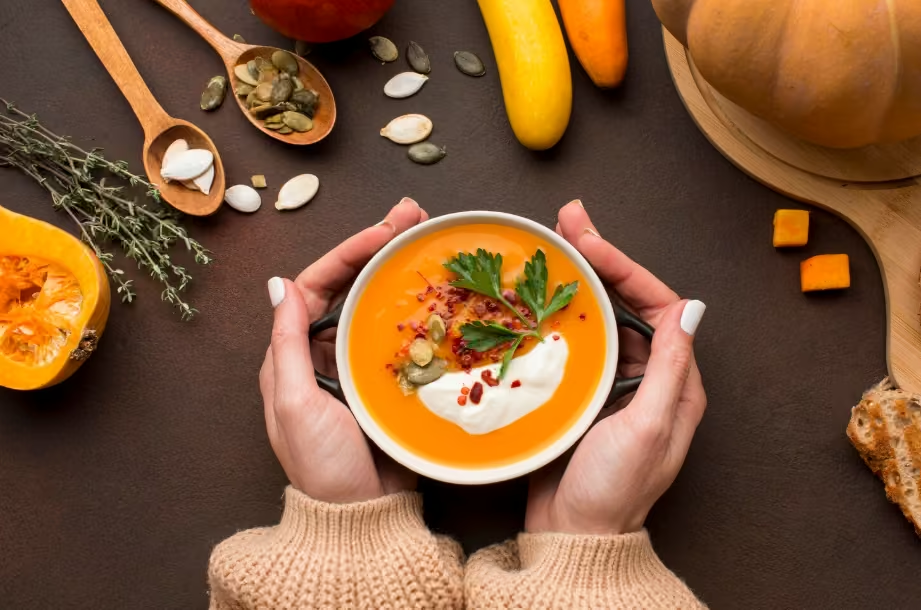
There’s a reason a bowl of soup from someone’s kitchen hits differently than anything served in a restaurant. And science actually explains why.
We’ve all been there. A long day at work, a grey Tuesday afternoon, or a moment when life feels a little heavier than usual and suddenly, all you want is something warm, familiar, and homemade. Not a meal kit. Not a takeaway. Something real.
Comfort food isn’t just about taste. It’s about memory, safety, identity, and belonging. And the more we understand the psychology behind it, the clearer it becomes why homemade food holds a kind of power that no commercial kitchen can replicate.
What Comfort Food Actually Does to Your Brain
When you eat something that feels emotionally familiar, like your grandmother’s curry, your mum’s lasagne, a stew you grew up with on cold Sunday afternoons, your brain doesn’t just register flavour. It triggers a cascade of emotional associations.
Research in the psychology of eating consistently shows that comfort foods are tied to autobiographical memory. The smell of a dish, the texture of something freshly baked, or even the particular way a meal is plated can instantly transport you to a specific moment in your past. This is sometimes called the Proust Effect, the idea that sensory cues, especially food and smell, unlock vivid emotional memories more powerfully than almost anything else.
But it goes deeper than nostalgia.
Eating comfort food activates the brain’s reward system. Dopamine is released. Cortisol levels drop. The nervous system responds as if it’s being reassured. For many people, familiar food is genuinely calming not just psychologically, but physiologically.
Why “Homemade” Carries a Different Weight
Think about the difference between picking up a ready meal and receiving a home-cooked dish from someone you trust.
The food might be nutritionally identical. But emotionally, they are worlds apart.
When food is made by hand by someone who chose the ingredients, seasoned it carefully, and thought about the person eating it, the meal carries an invisible ingredient that no supermarket can stock: intention.
Psychologists call this the IKEA Effect, a cognitive bias where people place higher value on things they (or someone they care about) has put effort into. Applied to food, a home-cooked meal is perceived as more nourishing, more satisfying, and more valuable regardless of cost or complexity.
This isn’t irrational. It’s deeply human.
When someone cooks for you, you’re not just receiving a meal. You’re receiving time, care, and connection. And your brain knows the difference.
The Social and Cultural Roots of Comfort Food
Comfort food is never just personal. It’s cultural.
Across every society in the world, food is the language of belonging. Celebrations are marked with specific dishes. Grief is eased by neighbours bringing meals. Communities are built around shared recipes passed down through generations.
In many South Asian, Caribbean, African, and Middle Eastern households in the UK, homemade food isn’t simply a preference, it’s a form of cultural identity. The dishes prepared at home carry heritage, story, and meaning that no commercial equivalent can match.
This is why, when someone from your community cooks the food you grew up with, something happens beyond hunger being satisfied. You feel recognised. Seen. Connected to something larger than yourself.
That feeling is irreplaceable, and it’s exactly what drives people back to homemade food again and again.
Why People Are Actively Seeking Homemade Food in 2026
Something significant has shifted in how people think about what they eat.
After years of ultra-processed convenience dominating the market, there’s a growing and very deliberate movement back towards food that feels real, personal, and locally made. Consumers are reading labels more carefully. They’re asking who made their food. They’re choosing the neighbour’s home-baked cake over the supermarket version not because it’s cheaper, but because it means more.
This shift is not just about wellness. It’s psychological.
People want to feel connected to their food. They want transparency, trust, and the human story behind the plate. And increasingly, they’re prepared to seek it out rather than settle for less.
The result? A growing appetite for exactly the kind of food that home cooks have been making all along and a real, meaningful opportunity for those with the skill and the passion to share it.
As we explored in The Rise of Community-Based Food Businesses, this isn’t a passing trend. It’s a fundamental shift in how communities want to eat, and home cooks are at the very centre of it.
The Cook’s Side of the Equation
Here’s something that doesn’t get talked about enough: the psychological benefits of cooking for others.
Research consistently shows that cooking for other people increases feelings of purpose, connection, and even self-worth. When your food brings someone comfort, when a customer messages to say your meal was exactly what they needed after a difficult week, that feedback loop is powerful.
For many home cooks, selling food is never purely transactional. It’s an act of care made visible. A way of contributing to your community. A form of creative expression that also happens to generate income.
This is why so many people who start home food businesses describe it as more than a side hustle. It becomes something meaningful… a way of doing work that feels aligned with who they are and what they value.
If you’ve ever cooked for someone and felt that quiet satisfaction when they closed their eyes after the first bite, you already understand this. And if you’ve wondered whether that skill could become something more, you might be closer to ‘ready’ than you think. Take a look at 7 Signs You’re Ready to Start Selling Homemade Food – the signs might already be there.
What This Means for the Future of Food
The psychology of comfort food points towards something simple but profound: people don’t just want to be fed. They want to feel something when they eat.
They want the warmth of a meal that was made with them in mind. The familiarity of flavours that feel like home. The quiet reassurance that comes from food prepared by someone who cares.
No algorithm, no industrial kitchen, and no fast food chain can manufacture that. But a home cook can.
That’s not a small thing. That’s a gap in the food system that real people with real skills and real kitchens are uniquely positioned to fill.
Final Thought
Comfort food is not comfort because of its ingredients. It’s comfort because of its story, where it came from, who made it, and what it means to the person eating it.
In a world that can feel increasingly impersonal and disconnected, that story matters more than ever. And the people best placed to tell it aren’t professional chefs with commercial kitchens and marketing budgets.
They’re home cooks. People who learned their craft from a parent or grandparent. People who cook with instinct, love, and knowledge passed through generations.
If that sounds like you, then what you do in your kitchen every day is not just cooking. It’s connection. It’s culture. It’s comfort in the truest sense of the word.
And there are people in your community who are already looking for exactly that.
WeCook connects passionate home cooks with food lovers in their local area. If you’re ready to turn your cooking into something more, download the WeCook app and start sharing what you make.